
Peach / Otomo Yoshihide's New Jazz Ensemble
Parallel / Metal Tastes Like Orange
Japanese free jazz conspirator Otomo Yoshihide recently performed in Seoul with Sachiko M, Sato Yukie, and Joe Foster. Above are two highlights from his career. The first is a dirty waltz through half-deserted streets and past unmoving bodies. The second, from Secret Recordings 1, is straight noise. Plus saxophone.
Showing posts with label SOUND. Show all posts
Showing posts with label SOUND. Show all posts
May 23, 2006
He walks home with a carton of white peaches / Held high on his should like a badge.

May 11, 2006
Rural Psychogeography
Jason Kahn’s sack of instruments features the basics: drums, wires, metals, room. Whatever he's using, he's using to explore the cavities and crevices of space. He'll mic water glasses, record a stairwell, or play the cymbals live without ever touching the two discs. He's featured on collaborations and compilations with titles like Popular Music That Will Live Forever, The End of the Fear of God, and Rural Psychogeography. Would you take a class entitled "Rural Psychogeography 300"? Would that class be bullshit? These are the type of questions inspired by those most elitist and elemental of musicians: noise artists. The answers are both "yes" and "no." With Kahn, potentials are exploited to such a degree that you are forced acknowledge just how much is there when you listen closely enough; you are forced to say, silently, "yes."
Kahn was recently in Seoul, playing at Relay ("a series of collective perfomances of media art presented by SLOWALK"). He stormed out obtrusively mid-performance, apparently after becoming upset with the work of one of his improvisational collaborators. Dude was using samples or some shit—samples! What a fool. Point is JK takes this stuff seriously but has the goods and good taste to back it up. You can read his thoughtful survey of the Relay scene here. Coincidentally, this weekend is huge for Relay, which will be featuring Japanese noise superstars Otomo Yoshihide and Sachiko M. Come with boobs and a Sharpie.
"Sihl 4" is from 2005's Sihl, named after the river in Zürich. "Timelines 3" is from 2005's Timelines. Kahn's site has tons more free sounds.
April 21, 2006
No Junk No Soul?
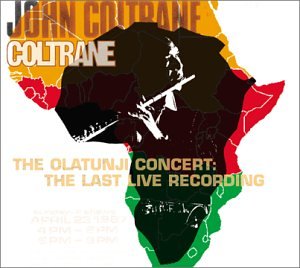 MP3 My Favorite Things (live) / John Coltrane [31.7 MB]
Yesterday I went to a traditional shaman ceremony in northern Seoul. We saw the 75-year-old North Korean woman who started the shaman resurgence in Korea in the 1970s. We saw a possessed shaman in drag dance on a giant knife blade. We saw a woman who'd hired shamans for a private ritual get pelted with rice and beans. And we saw voodoo-like dolls being made to scare evil spirits away from the real bodies of children.
Those were the highlights. But the one thing you don't really notice until it's gone, the one thing that truly matters, is the music. Whenever the music stops, the sacred quality of the rituals dissipates almost entirely. Without the incessant rhythms and the simple melodies, the magic just isn't there. My favorite instrument was the "taepyongso," which sounds like a stunted oboe crossed with a recorder. That is, like the alto sax in free jazz. It's riffs sound like Ornette Coleman or Albert Ayler even when they're entirely harmonious.
This version of "My Favorite Things" is from Coltrane's last live recording, from one of the two shows he played in Olatunji, Africa, in 1967. There's no alto here, but the song still reminds me of the taepyongso, if only because it's as primal as can be. In "Brian the Bachelor," a season four episode of Family Guy, Brian and Brooke bond over "early Coltrane, before he got clean." Brian comments, yeah, yeah, "no junk no soul." But that is bullshit. Listen to this song and tell me Coltrane has no soul at the end of his career in '67. Sanders and Coltrane both sound as if they're punishing their own enormous spirits—trapped deep inside their instruments—until they scream cries and are freed. Only for the briefest moments does any of this maniacal 34-minute trip resemble "My Favorite Things," and the only one who needs junk to take it is the listener. This is not for the faint of heart. This is for someone with a desert or two and not much else.
John Coltrane, soprano, tenor saxophone; Pharoah Sanders, tenor saxophone; Alice Coltrane, piano; Jimmy Garrison, bass; Rashied Ali, drums; Algie Dewitt, bata drum; probably Jumma Santos, percussion
Also: Check out Armrest, a music blog that thoughtfully analyzes the way specific contemporary songs borrow from their ancestors.
March 26, 2006
ATTN Musicians: Sample These Clips!
 The Rhythm Method / TOEFL Listening
Hobbies / TOEFL Listening
Let me briefly explain how TOEFL Listening classes work at most hagwons in Korea: The teacher stands in front of a group of 10 to 15 Korean middle schoolers or high schoolers with a small boombox, a tape, and a book. He or she plays a recorded lecture from the tape while the kids fill in blanks in their workbooks. This is difficult for the students, so the teacher will often rewind and replay short pieces of the lecture. The primary skill required of the teacher, then, is an ability to maneuver a tape deck expertly. Basically, you end up playing tiny portions over and over, as many as five or six times, spaced only by the sound of an old tape rewinding. This part is fun because it sounds like a glitch-hop song, like the teacher should be simultaneously beatboxing and manning the decks.
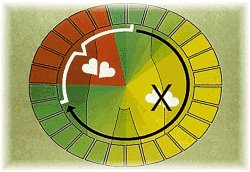
But TOEFL Listening class really gets interesting when the content of the academic lecture is something special itself. Sometimes you learn that crows are smarter than chimpanzees. Sometimes you are provided with a thorough answer to the age-old question "What is a sneeze?" My absolute favorite lecture, however, is entitled "The Rhythm Method of Birth Control." When I play this one for my 11-year-old students, the number of questions they ask is simply inspiring. It's particularly fun to navigate the rocky moral terrain of not really describing intercourse while making it clear that the rhythm method is not effective—but still more effective than the pull-out method.
The highlight from "The Rhythm Method of Birth Control" occurs at 41 seconds in when the female lecturer announces, "The method's main flaw lies in the menstrual cycle itself."
The second clip is of a TOEFL conversation in which a man is asking a boy and a girl about their hobbies. The highlight occurs at 16 seconds in when the man does his very best impression of a sexual predator and says, "That's interesting... How many car models do you have?"
Subscribe to:
Posts (Atom)